Impact of deposition on atmospheric chemical processes
Modeling the impact of deposition of gaseous organic compounds on atmospheric oxidation.
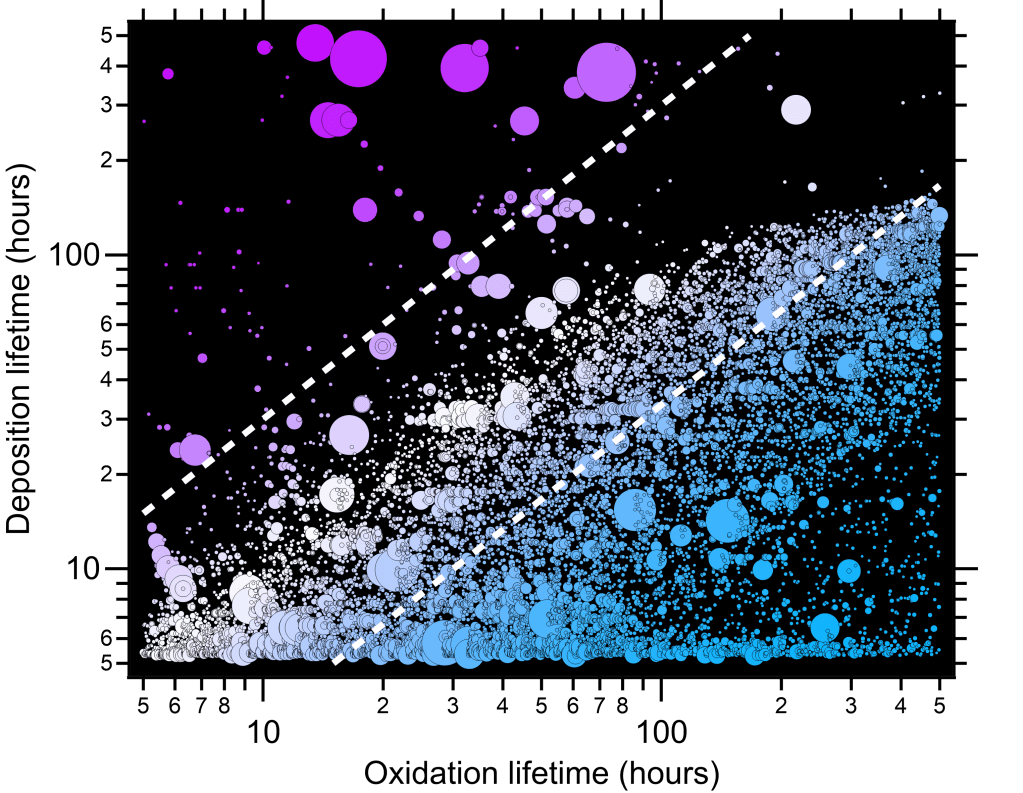
- Developed a framework of competition between oxidation and deposition and demonstrated that reactive organic carbon in the transition regimes accounts for a major fraction of both atmospheric reactivity and potential for secondary aerosol formation.
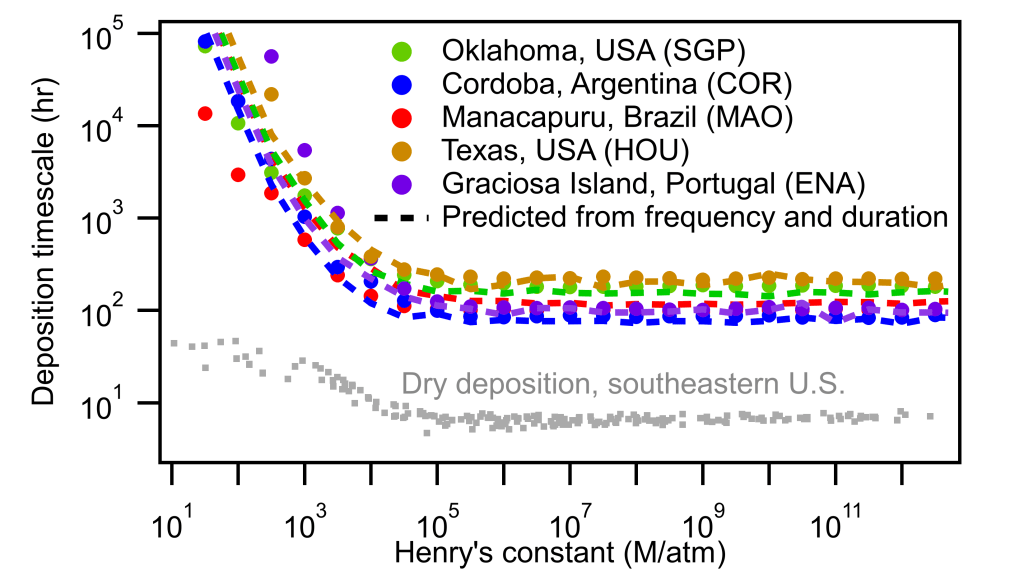
- Demonstrated an approach to estimate the timescales of wet deposition of gaseous organics using basic real-world precipitation data.
- Investigated the impact of deposition on atmospheric chemistry by simulations using a 0-d box model of photochemical oxidations and regional air quality models.
Emission and transport of semi-volatile organic compounds (SVOCs)
Experimental analysis and modeling of emission, fate, and transport of phthalate plasticizers in a residential test house.
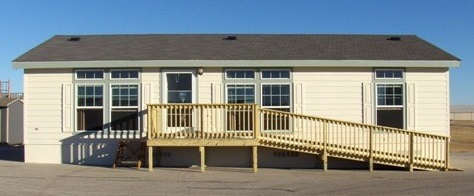
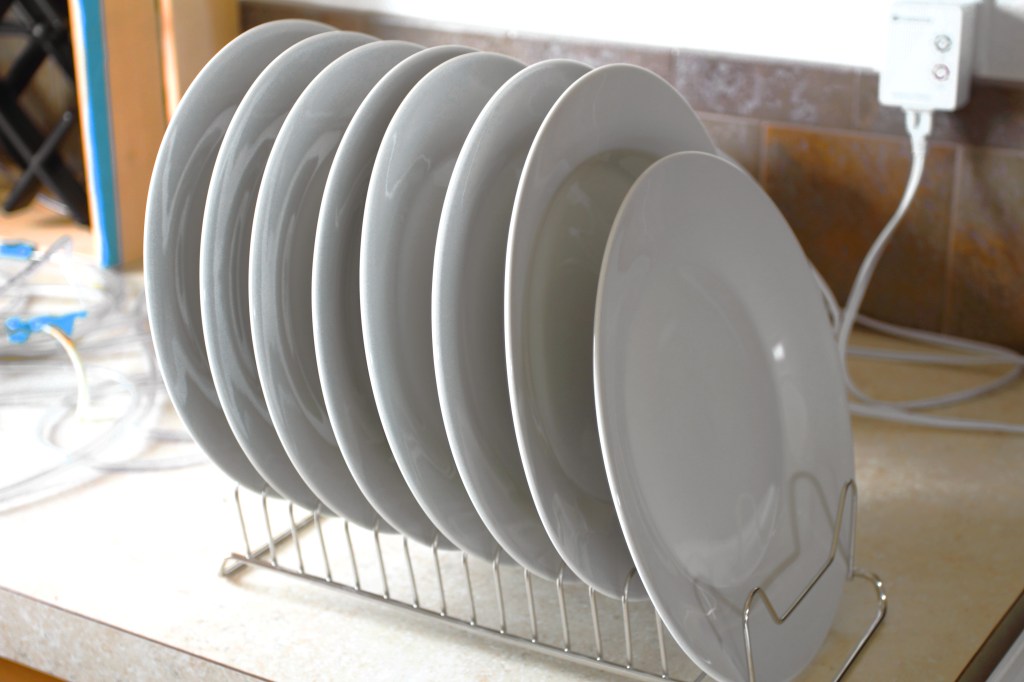
- Investigated the partition dynamics by monitoring phthalate concentrations in air and on various indoor surfaces (e.g., dust, clothing, windows, mirrors, dishware) in a full-size, residential test house with controlled levels of indoor temperature over a year.
- Developed and validated a room-scale SVOC emission and transport model using the measured data in the test house.


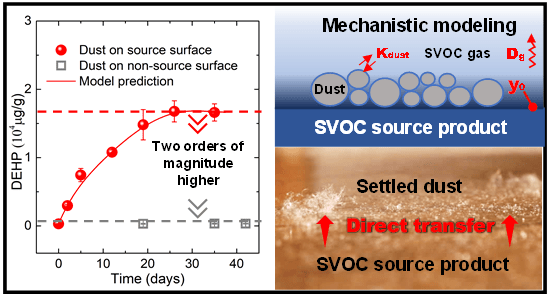
Direct transfer of SVOCs from indoor source products to dust: laboratory measurements and predictive modeling
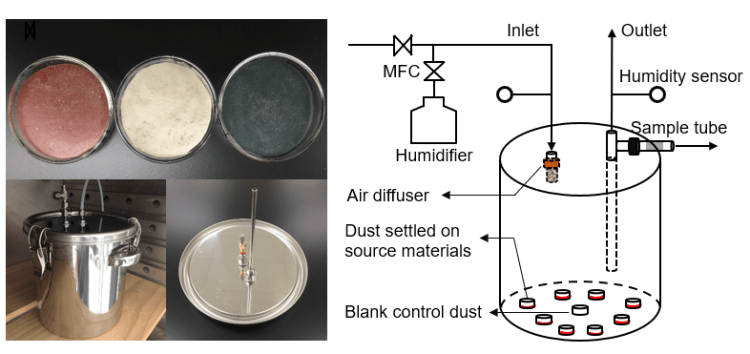
- Monitored the accumulation of phthalate and phthalate alternatives in dust settled on vinyl floorings and crib mattresses through a self-designed test environmental chamber.
- Developed a mechanistic model to predict the significantly elevated phthalate concentrations in dust in contact with the flooring source materials.
- Estimated the potential ingestion exposure of children to dust-phase SVOCs through frequent dust pick-up and hand-to-mouth behaviors
Isomer-resolved chemical composition of laboratory SOA and airborne particles in a university conference room.
- Studied the isomer-resolved chemical composition of SOA in an oxidation flow reactor with changing OH radical exposure.
- Investigated the association between SVOCs airborne concentrations and human activities through two-week indoor deployment of the new instrument.

SVOC exposure and its health effects
Investigation of SVOCs in dust of U.S. low-income homes and their association with season, building characteristics, and childhood asthma.
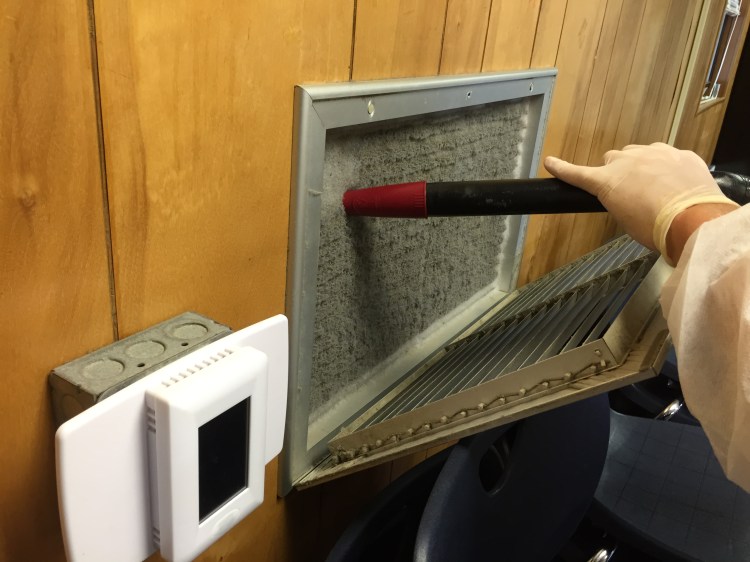
- Organized field operations, collected samples, and measured phthalate and organophosphate concentrations in settled floor dust and the HVAC filter dust in both winter and summer in 59 low-income homes in Texas, USA.
- Investigated the association between SVOC concentrations and building characteristics (e.g. age and area of homes, frequency of cleaning activities, use of heating and cooling device, and type of flooring materials) through various statistical methods.
- Studied the positive association between childhood asthma severity and SVOC levels in HVAC filter dust.


Instrument design and development
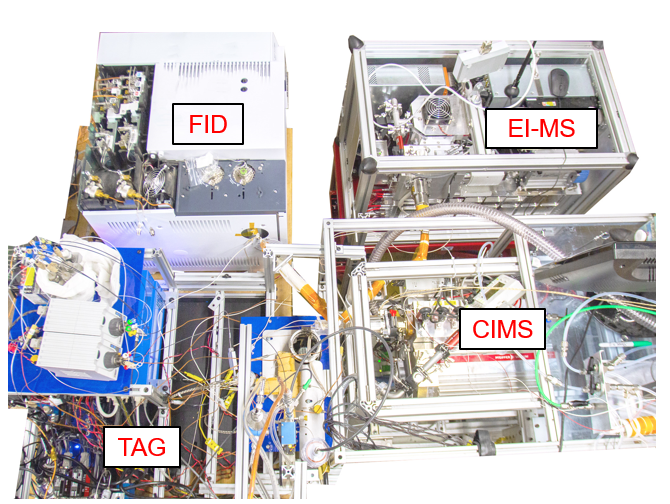
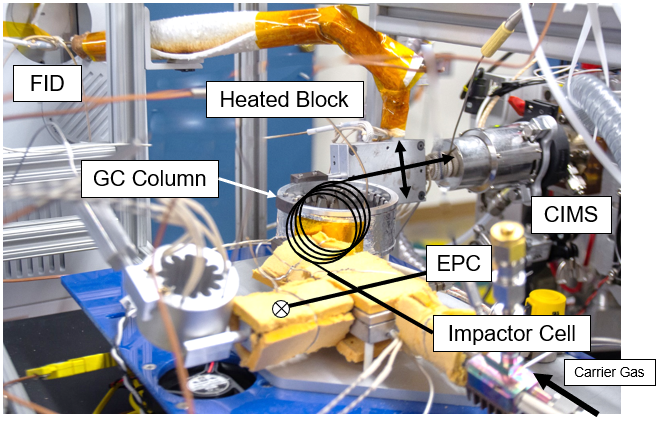
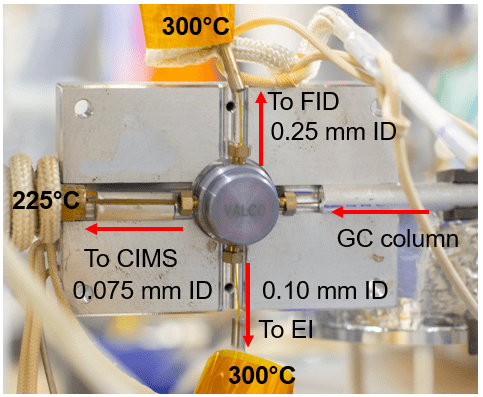
Design, improvement, and deployment of novel instrumentation for isomer-resolved online quantification of trace organics in the air.
- Developed a field-deployable, online instrument for isomer-resolved quantification of particle-phase organics by coupling a flame ionization detector (FID) and a chemical ionization mass spectrometer (CIMS) to a gas chromatograph (GC).
- Demonstrated the technique of using a coupled FID as a calibration tool for quantifying CIMS sensitivity of unknown chemical species and applied this technique to examine the “voltage-scanning” method for estimating CIMS sensitivity.
- Quantified the mathematical bias in a log-linear-based calibration curve and developed a parameter-explicit solution for completely removing the bias within the context of CIMS calibration.
- Improved the understanding of ionization chemistry in a CIMS by applying a multi-reagent-ion mode (I– and O2–) and investigating the mass spectra of individual compounds from liquid standard injections and SOA samples.
Integrated sustainability/resilience assessment
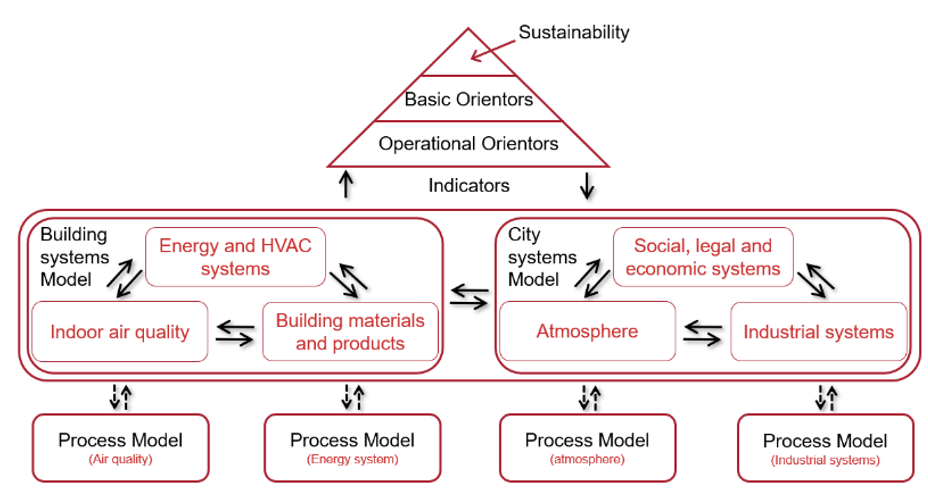
Integrated assessment across building and city scales using a system-of-systems framework
- Reviewed, categorized, compared, and evaluated existing assessment approaches to socio-environmental problems at the building and city scale.
- Proposed a unified framework based on the system-of-systems (SoS) concept that connects the building and urban environment.

 Chenyang Bi's personal website